


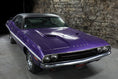
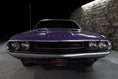
Dodge Challenger (first generation)
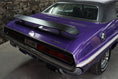
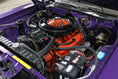
The E-body Challenger was introduced in the autumn of 1969 for the 1970 model year,similar in appearance to but somewhat larger than its less expensive, platform-sharing Plymouth sibling, the Barracuda. It was positioned to compete against the Mercury Cougar and Pontiac Firebird in the upper end of the pony car market,a large and lucrative niche of two-door sport coupes that the Ford Mustang had pioneered in April 1964. Like the Barracuda, it was available in a wide variety of trim and option levels. In spite of its premium price, size, and market placement, Chrysler intended the new Challenger to be the most potent pony car ever,and virtually every engine in its inventory (including the famed 426 Hemi) was made available.
While the vehicle was all new, Dodge had used the Challenger name in 1959 for the Silver Challenger, a limited-production two-door coupe based on the fourth-generation Dodge Coronet.
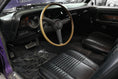
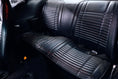
The 1970 Challenger's longer wheelbase, larger dimensions, and more luxurious interior than the Mustang or its smaller Chrysler products stablemate, the Barracuda, were prompted by the launch of the upscale 1967 Mercury Cougar, a bigger, better appointed, and more expensive pony car aimed at affluent young American buyers. The 110 in (2,800 mm) wheelbase was 2 in (51 mm) longer than the Barracuda's, and the Dodge differed in its sheet metal, much as the Cougar differed from the shorter-wheelbase Mustang. Air conditioning and a rear window defogger were optional. With 1971 being the sole exception, the front ends of both cars differed from each other in that the Challenger had four headlights and the Barracuda had only two.
The exterior design was penned by Carl Cameron, who was also responsible for the exterior designs of the 1966 Dodge Charger. Cameron based the 1970 Challenger grille on an older sketch of a stillborn 1966 Charger prototype that was to have a turbine engine. The pony car segment was already declining by the time the Challenger arrived. Sales were excellent initially, with 76,925 units moved in the model's debut year, but fell dramatically after 1970. Though sales rose for the 1973 model year with over 27,800 cars being sold, Challenger production ceased midway through the 1974 model year. A total of 165,437 first-generation Challengers were sold.
- Info@Soneffs.com
-
303-296-1688
-
2140 Arapahoe St, Denver, Colorado, United States
- Find us on Facebook
- Find us on Instagram
-
Monday — Friday, 9am — 5pm ET
